

Our Process
At Tamrain, we take great care in producing premium Jeju Black Pork through a responsible and sustainable process. From working with trusted farmers and following strict quality standards to using specialized feeding programs and eco-friendly practices, every step is designed to ensure the best pork quality. Discover what sets Tamrain Jeju Black Pork apart!

01
Tamrain Jeju Black Pork Production
Tamrain is committed to producing premium-quality Jeju Black Pork through a systematic and sustainable approach.
Production Capacity
-
150 pigs per day
-
3,300 pigs per month
-
40,000 pigs per year
02
Jeju Black Pig Farming & Quality Standards
Tamrain ensures strict quality control from farm to table by working closely with trusted farmers who follow rigorous management standards.
Pig Farming Schedule & Size Requirements
-
Weaning weight (25 days): ~5 kg
-
Shipping age: ~200 days
-
Live weight: 105–110 kg
-
Carcass weight: ~78 kg
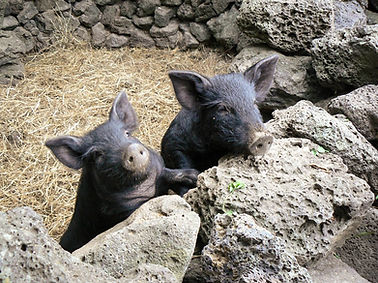
Unlike commercial pig breeds, Jeju Black Pigs have unique characteristics, including smaller litter sizes, slower growth rates, and thicker back fat. To maintain optimal pork quality, Tamrain implements a structured farm management system. As part of our expansion efforts, we are addressing facility shortages and planning the construction of a new pig barn.

03
Feeding Process & Nutritional Approach
Jeju Black Pigs are raised under a specialized feeding program to ensure superior meat quality.
-
Their diet is similar to that of standard pigs but adjusted for their unique growth patterns.
-
After 150 days, high-protein, high-calorie feed can cause excessive back fat thickness, so a controlled, lower-grade finishing feed is used to maintain the ideal fat-to-meat ratio.
04
Commitment to
Sustainability & Ethical
Farming
Natural Mating & Genetic Purity
-
While most Jeju Black Pig farms rely on artificial insemination for efficiency, Tamrain recognizes the importance of preserving native genetic traits.
-
Moving forward, we aim to enhance crossbreeding programs with native Jeju Black Pigs, ensuring distinctive meat quality that differentiates Jeju Black Pork from other breeds.
Environmental Responsibility
-
We are actively working to reduce odor, improve pig barn conditions, and promote sustainable farming practices to coexist harmoniously with local communities.
-
By investing in eco-friendly solutions, Tamrain strives to produce the highest-quality Jeju Black Pork while fostering a responsible and sustainable pig farming industry.
_%ED%81%AC%EB%A1%AD.jpg)

05
Advanced Butchering Techniques for Ethical Processing
Tamrain ensures humane and ethical butchering by outsourcing to specialized slaughterhouses that follow high industry standards. These facilities use CO₂ stunning to minimize stress for pigs before processing.
CO₂ Stunning System
-
Uses the Somnia 408 CO₂ Stunning System, a globally recognized humane method.
-
Process:
-
Pigs are exposed to controlled CO₂ gas, making them unconscious before slaughter.
-
Reduces stress, noise, and movement, improving animal welfare and meat quality.
-
-
Benefits:
-
Prevents poor-quality (PSE) meat.
-
Safer for workers, as pigs remain calm.
-
Less blood discoloration, keeping the meat clean and appealing.
-
Automated Processing & Hygiene
-
After stunning, automated systems handle bleeding, dehairing, and cleaning, reducing contamination.
-
Steam-based dehairing:
-
Prevents water contamination.
-
Ensures high hygiene without chemicals.
-
-
Final steps:
-
Flame treatment and washing remove any remaining hair and sterilize the carcass.
-
Outsourcing Benefits
Since Tamrain does not own the butchering facility, outsourcing provides key advantages:
-
Cost Savings – No need for high capital investment in slaughterhouse operations.
-
High Standards – Partnering with specialized facilities ensures strict hygiene and humane practices.
-
Scalability & Flexibility – Tamrain can adjust production levels based on demand.
-
Focus on Core Business – Instead of managing a slaughterhouse, Tamrain can focus on branding, sales, and market expansion.
By outsourcing, Tamrain maintains consistent quality, humane slaughtering, and operational efficiency, ensuring premium pork production.
06
Comparison with European/Spanish Butchering Standards
European and Spanish butchering processes follow strict EU Animal Welfare Regulations and incorporate traditional methods, especially in Iberian pork production. Compared to these standards, Jeju’s process is more automated and industrialized, ensuring efficiency and consistency.
Stunning & Pre-Slaughter Handling
Both Jeju and European/Spanish facilities commonly use CO₂ stunning to minimize stress before slaughter. However, Jeju’s process is fully automated, reducing human error, while Iberian pork farms often rely on traditional handling methods with less automation. Bleeding is immediate and automated in Jeju, while smaller Spanish farms may still use manual bleeding methods.
Dehairing & Cleaning
Jeju’s facility uses steam-based dehairing with automated paddles, which is more hygienic and cost-efficient than the hot water scalding and mechanical scraping commonly used in Spain. Both systems use fire-singeing to remove fine hairs, but Jeju’s automated whip-wash system provides an extra level of cleanliness, reducing contamination risks.
Chilling & Meat Preservation
Jeju relies on rapid chilling (0°C to -5°C) to preserve meat quality. In contrast, Spanish facilities—especially those handling Iberian pork—favor dry aging, which enhances flavor and texture naturally. Jeju’s tubular rail system allows for large-scale storage, while Spanish farms often use traditional rail hanging or refrigerated storage methods.
Jeju’s butchering process is highly automated, ensuring efficiency, hygiene, and consistency in meat processing.
